
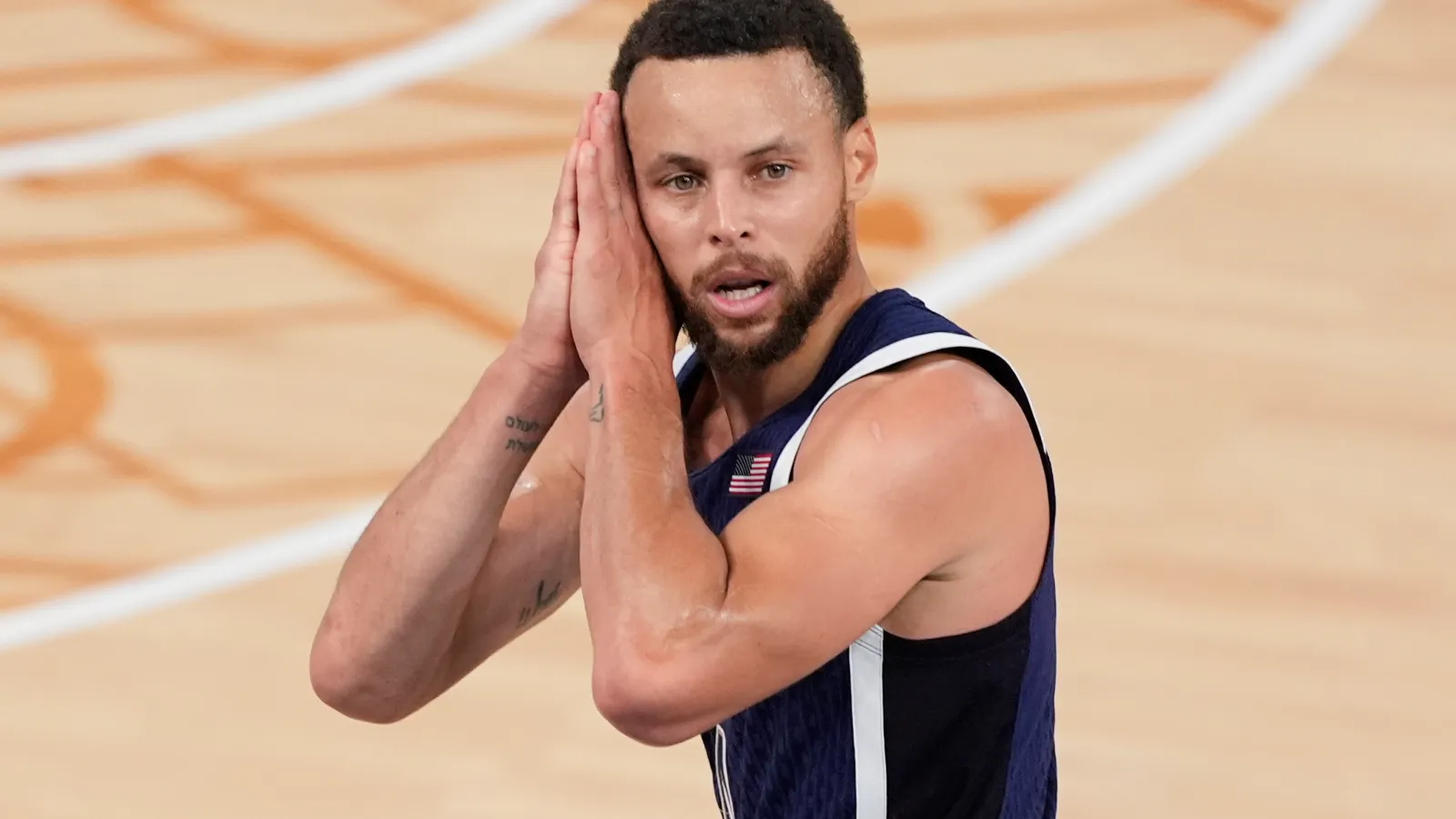
Stephen Curry has been able to sign a contract extension with the Golden State Warriors since August 29. Media Day is on September 28 and training camp opens at BYU-Hawaii the day after, nothing has been signed, and the people closest to it do not appear bothered.
The terms are not in dispute. Curry can sign a maximum two-year, $136.7 million extension through June 30, 2027, according to ESPN's Bobby Marks. The Over-38 rule caps him at two added years; if he waits for free agency, Marks says he can sign for up to three seasons. This season he earns $62.6 million, the final year of the deal he signed in August 2024.
Nor is the intent. "There's no question I want to be here the rest of my career, and I'm pretty sure that's going to happen," Curry told NBC Sports Bay Area's Dalton Johnson at the end of August. ESPN's Anthony Slater reported that "the sides are expected to engage with a mutual desire to keep Curry with the Warriors for the entirety of his career, team sources continue to confirm." General manager Mike Dunleavy told reporters in early August he was "pretty confident" Curry finishes his career in San Francisco, and that the decision is Curry's.
So the question is not whether. It is when, and who the timing serves. Two numbers frame it.
The first is $43 million. That is all the guaranteed money the Warriors have committed for 2027-28, according to Danny Emerman of the San Francisco Standard, because Curry, Draymond Green and Jimmy Butler are all on expiring contracts. The second is $65.7 million, which Marks says would be the first-year salary of a maximum extension. Sign now, and one line on next summer's books is bigger than every other line combined. Wait, and that line does not exist until July.
That is the case for waiting, and Brian Windhorst made it on ESPN's Hoop Collective podcast: if Curry does not sign now, the Warriors could have more than $100 million in cap space next summer. Marks puts the figure at $45 million to $60 million if Curry takes the maximum first-year salary. Either way, the front office would go shopping with Curry's number already written in, or without it.
The Warriors are not pushing. Slater said on the same podcast that the team is adamant it is not negotiating.
If you want the one-year max, if you want the two-year max, if you want to wait, here's your menu. Pick off your menu.
Anthony Slater, ESPN, on the Hoop Collective podcast
Emerman reported the options presented as a two-year maximum, a one-year maximum, a discounted deal, or delaying altogether. Slater's own read, on 95.7 The Game, was that he "would not be shocked if he takes the max."
The case for signing now is Curry's more than the team's. He is 38 and turns 39 in March, and he played 43 games last season after a runner's knee cost him 27 in a row from the end of January. The Warriors finished 37-45, tenth in the West, and went out in Phoenix in the play-in. Butler tore his ACL in January and Moses Moody his patellar tendon in March, and Dunleavy has said both will miss at least the start of the season. An expiring contract in a season like that invites exactly the kind of noise Curry has spent 17 years avoiding. "The deal and the contract stuff will happen at the right time," he told NBC Sports Bay Area, "and we're not letting it be a distraction from our preparation for the season."
There is a comparison down the coast. The Lakers answered LeBron James's exit for Philadelphia by committing years and picks around Luka Dončić. The Warriors, who pursued James too, have committed nothing beyond June, and until Curry picks from the menu, that is by design as much as by circumstance.
Steve Kerr's new two-year contract runs through 2027-28, so the coach is signed for the seasons an extension would cover. Camp opens September 29 in Hawaii, the preseason starts October 4 against the Clippers in Honolulu, and the regular season on October 21 in Los Angeles. None of those dates is a deadline. The only one that is falls on June 30.
