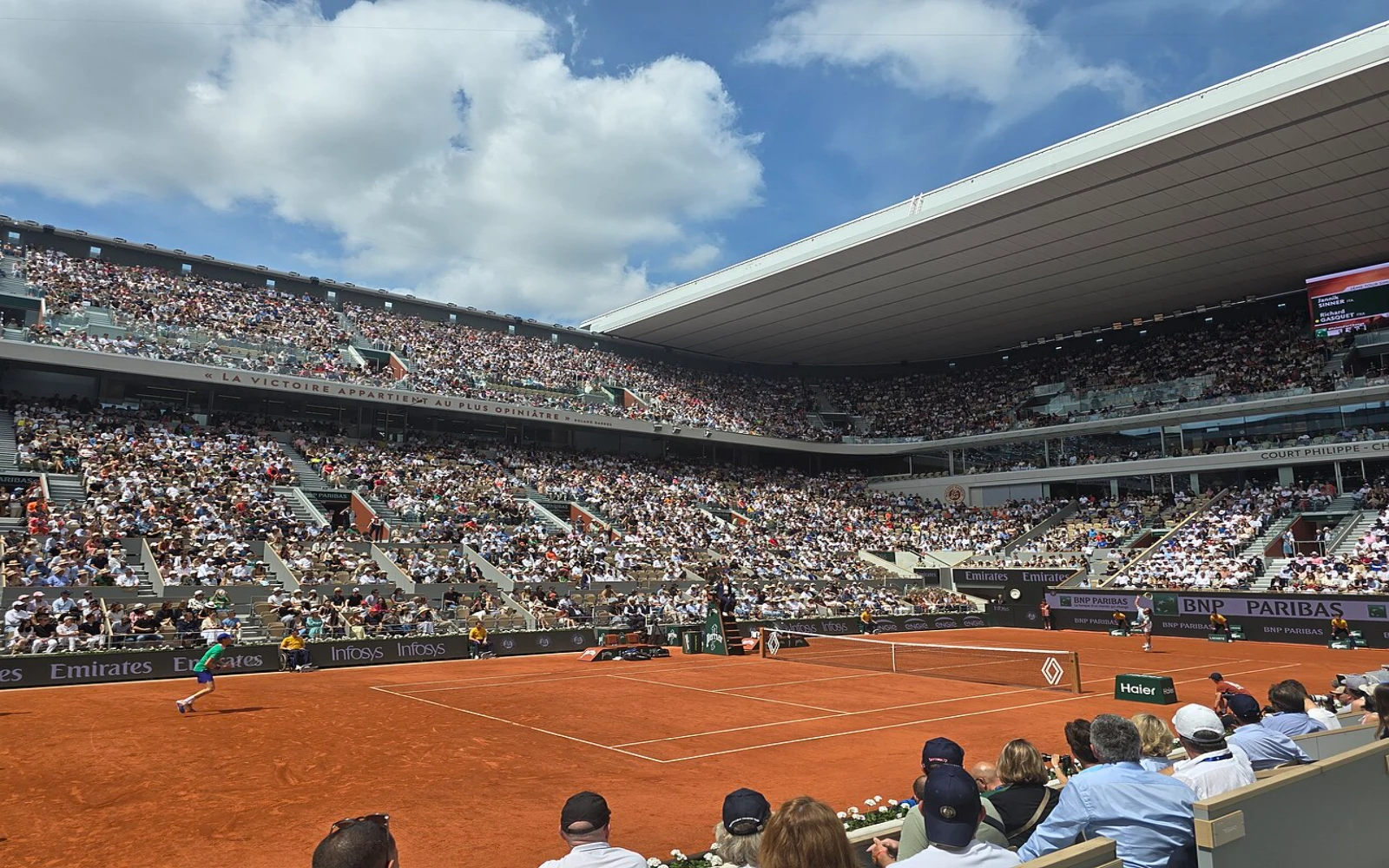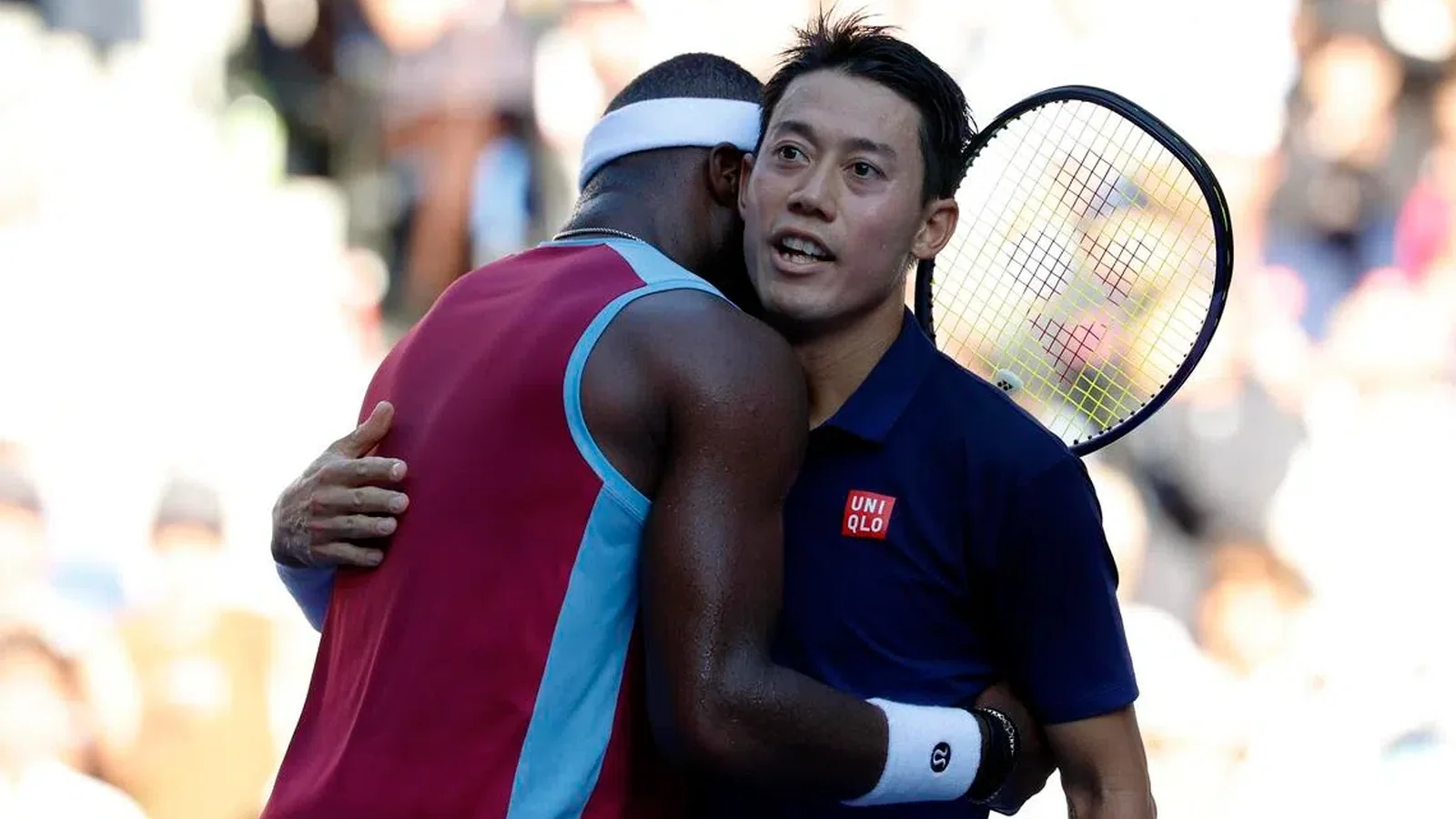
Kei Nishikori's career ended on Thursday on the court where so much of it had been played. Frances Tiafoe, the second seed and world No. 8, beat him 6-4, 6-4 in the first round of the Japan Open in Tokyo, and the Ariake Colosseum, full on a weekday afternoon, stayed long after the last point to say goodbye.
The match followed the rankings more than the occasion. Tiafoe broke in the opening game and Nishikori broke straight back in the fourth, but a second break in the seventh gave the American the set. One break early in the second set was enough after that, and the final point went to a Tiafoe drop shot. Tiafoe met him at the net with an embrace rather than a celebration. Nishikori was not entered in the doubles, so this was the last match of his career. Tiafoe goes on to face Arthur Fils, who beat him in the Cincinnati final in August.
Nishikori sat on his bench in tears before the farewell began. Shuzo Matsuoka came on court to host it, and four of the biggest names in Japanese tennis followed with flowers: Ai Sugiyama, Kimiko Date, Shingo Kunieda and Go Soeda. A video tribute played messages from players around the tour, and Novak Djokovic told him he was glad the end had come at home, in front of his own people.
Right up until the match ended, I never thought I would cry this much. I started tennis at five, and with the 30 years I built up ending here, the sense of loss, that I would never play for real again, came rushing in.
Kei Nishikori, in his on-court interview, translated from Japanese
He said he wished he had played better, but that he was proud he had never given up and had fought to the very last point.
The career behind that moment changed what Japanese tennis believed was possible. Nishikori grew up in Shimane, started playing at five and moved to Florida at 14 to train at IMG Academy without speaking English. He turned professional in 2007 and became the first Japanese man to reach the top 10. By March 2015 he was No. 4, the highest ranking any Asian man has held.
The defining fortnight came at the 2014 US Open. He needed five sets to beat Milos Raonic and then Stan Wawrinka, and he beat world No. 1 Djokovic in four in the semi-finals. That made him the first Asian man to reach a Grand Slam singles final, which he lost to Marin Čilić in straight sets. He won four titles that season, including his second in Tokyo.
Two years later he beat Rafael Nadal in Rio for an Olympic bronze medal, Japan's first in tennis in 96 years. He finished with 12 ATP titles, 15 more finals, four of them at Masters 1000 level, and 452 tour-level wins. He won 72.5 per cent of the deciding sets he played, a record only Björn Borg and John McEnroe have beaten.
The later years were shaped by injury. He had surgery on his right elbow in 2009 and again in 2019, hurt his wrist in 2017, and had hip surgery in January 2022 that kept him off the tour until June 2023. His last title came in Brisbane in 2019. This year he missed the Australian Open with shoulder pain and played only on the Challenger tour. In August he lost in the final round of US Open qualifying to Rei Sakamoto, a 20-year-old who grew up calling Nishikori his idol.
He announced in the spring that 2026 would be his last season. "To be honest, I still wish I could continue my playing career," he wrote. He chose to finish at the tournament he won in 2012 and 2014, the one he once said felt almost like a Grand Slam to him because it was home. He leaves it with a 24-10 record.