Tennis
The clay-court Grand Slam in Paris, the sternest physical test of the season.
Format
Grand Slam
Country
France
When
Late May to early June
Where
Stade Roland-Garros, Paris
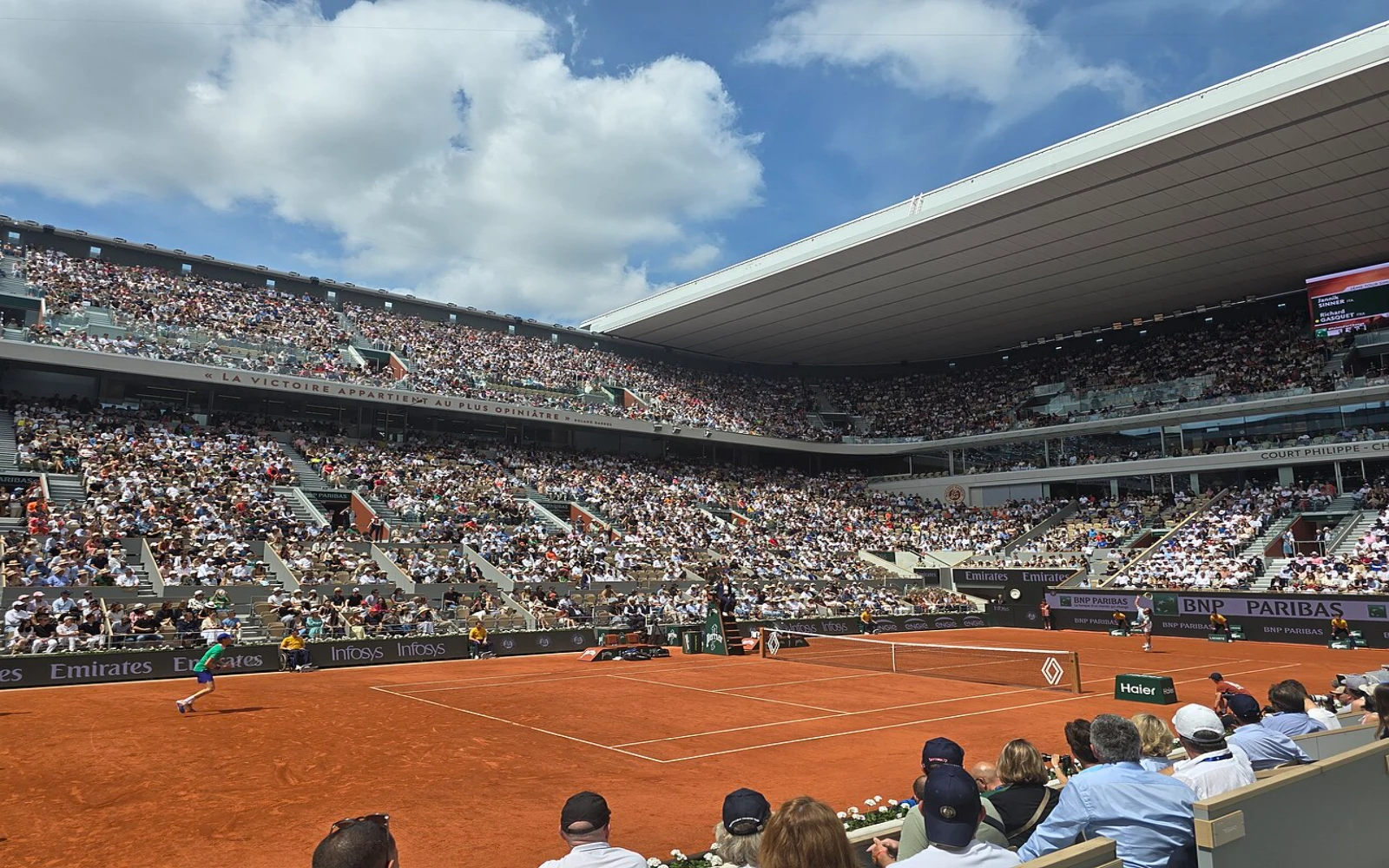
Roland-Garros is the second Grand Slam of the tennis season and the only one played on clay, staged in Paris across the last week of May and the first of June. The 2026 tournament was the 125th edition, held at a stadium that has carried the name of the French aviator Roland Garros since it was built in 1928 to host a Davis Cup defence.
Clay changes the sport. The ball sits up and slows down, rallies stretch, and matches routinely run past four hours, which is why Paris rewards patience and physical endurance more than any other major. It is also the last major where a human makes the call. Roland-Garros kept its line judges for 2026 while the Australian Open, Wimbledon and the US Open had all moved to electronic line calling, leaving umpires to climb down from the chair and inspect ball marks in the dust.
Money is where it lags. The 2026 purse of €61.7 million was a record for the tournament and still the smallest of the four majors, a gap that has become a live storyline in the wider argument over Grand Slam revenue sharing. Alexander Zverev and Mirra Andreeva won the 2026 singles titles, each for the first time.
For Arena Bulletin, Roland-Garros is the sternest physical test of the tennis year and the clearest measure of who can actually last.